
Mauve (H2) flowers; IX; foliage dark green, tipped with pink and red in spring and summer; habit compact; height 10cm; spread 25cm. Collected on Trink Hill, Cornwall, England by Richard (Dick) Ide. Formerly called Calluna vulgaris ‘Maiden’s Blush’.
Month: August 2015
‘Doctor Violet Gray’ (=Erica verticillata)
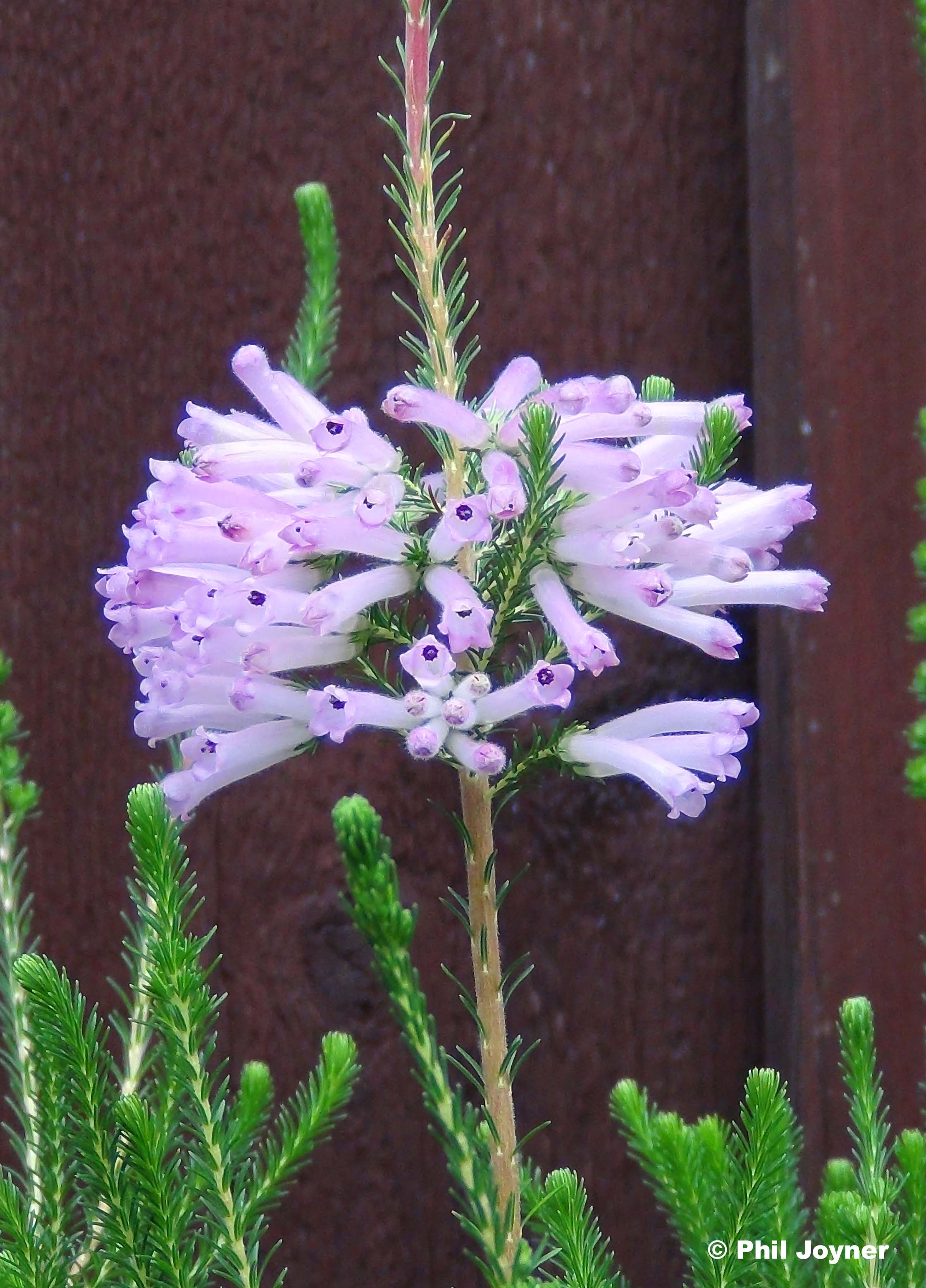
Flowers light pink, tubular, 20mm, 3mm diameter; arranged in terminal 4-flowered, or occasionally 3-flowered, umbels, on very short lateral branches. Synflorescences neat, spike-like, each with up to 6 whorls of flowering branches, on strong, erect, main branches; terminal apex of the stem continuing growth. Non-flowering lateral branches on the main flowering stems to 4–5cm long, arranged in whorls of 5. Medium-sized, erect clone, to an average height of 1.0–1.2m, to 0.5m broad. Viable seed produced sparingly.
Origins: accession number 548/06; from the collection of the late Dr Violet Gray who was a member of The Heather Society’s Cape Heaths Group; she is also commemorated in Calluna vulgaris ‘Mrs Ronald Gray’.
Being of South African origin the plant is not regarded as hardy in the UK and is preferably grown in a pot, using ericaceous compost, and brought into a frost free, light and airy environment during the winter months.
® E.2012:09 registered by Anthony Hitchcock, Nursery, Plant Collections & Threatened Species Program Manager Kirstenbosch National Botanic Garden.
‘Rosita’
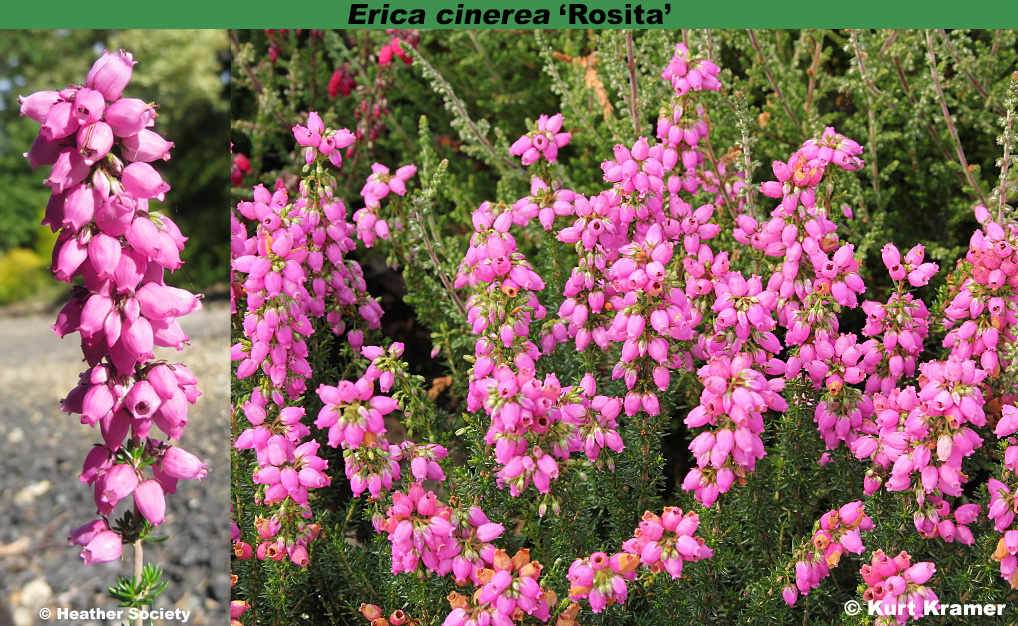
Pink rose(H7) flowers; VII-IX; foliage dark green; habit compact erect; height 20cm; spread 30cm.
‘Hubertal’
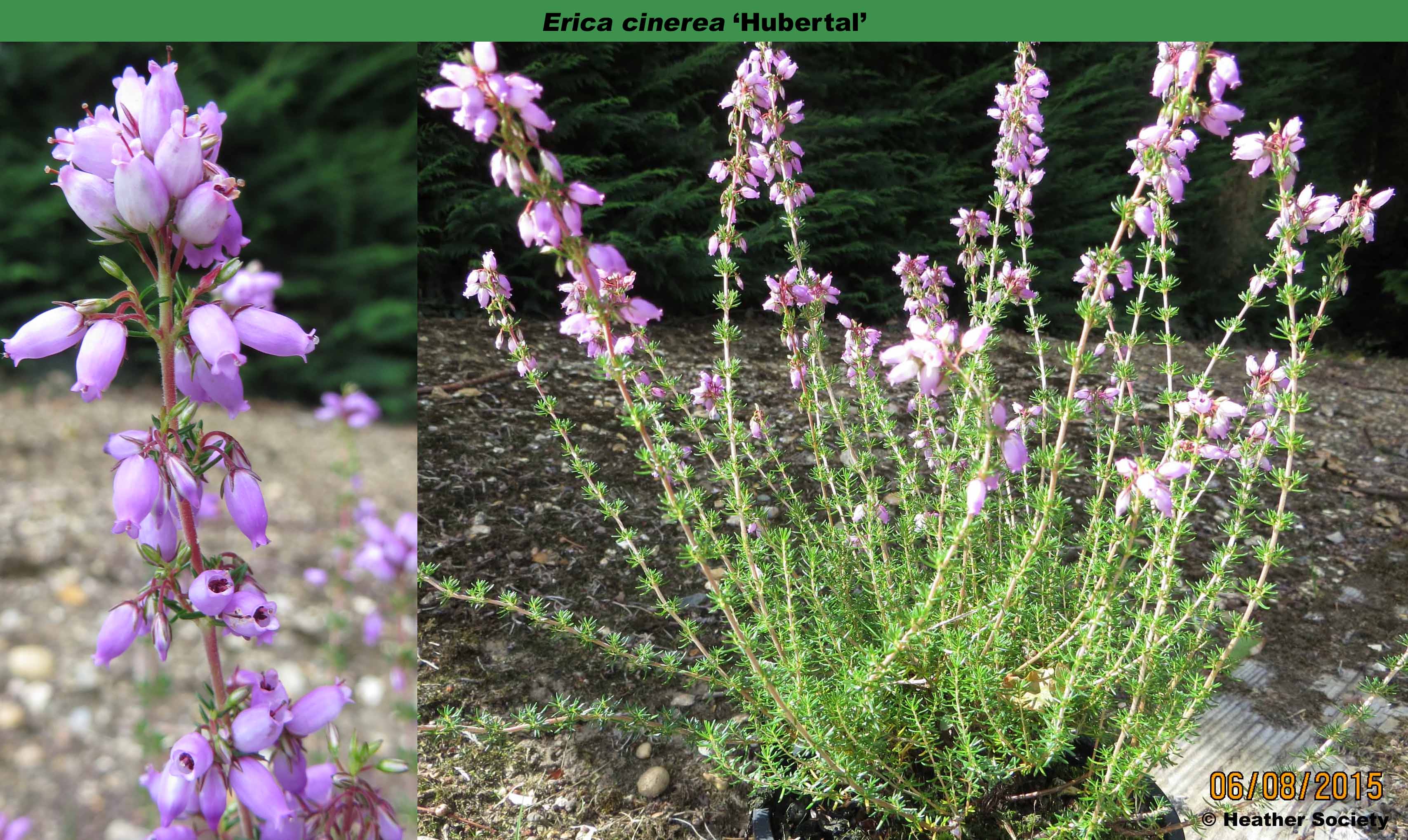
Amethyst(H1) flowers; VII-IX; foliage light green; habit open erect; height 30cm; spread 30cm. Less floriforous and taller than ‘Maxchan’. Of French descent.
‘Maxchan’
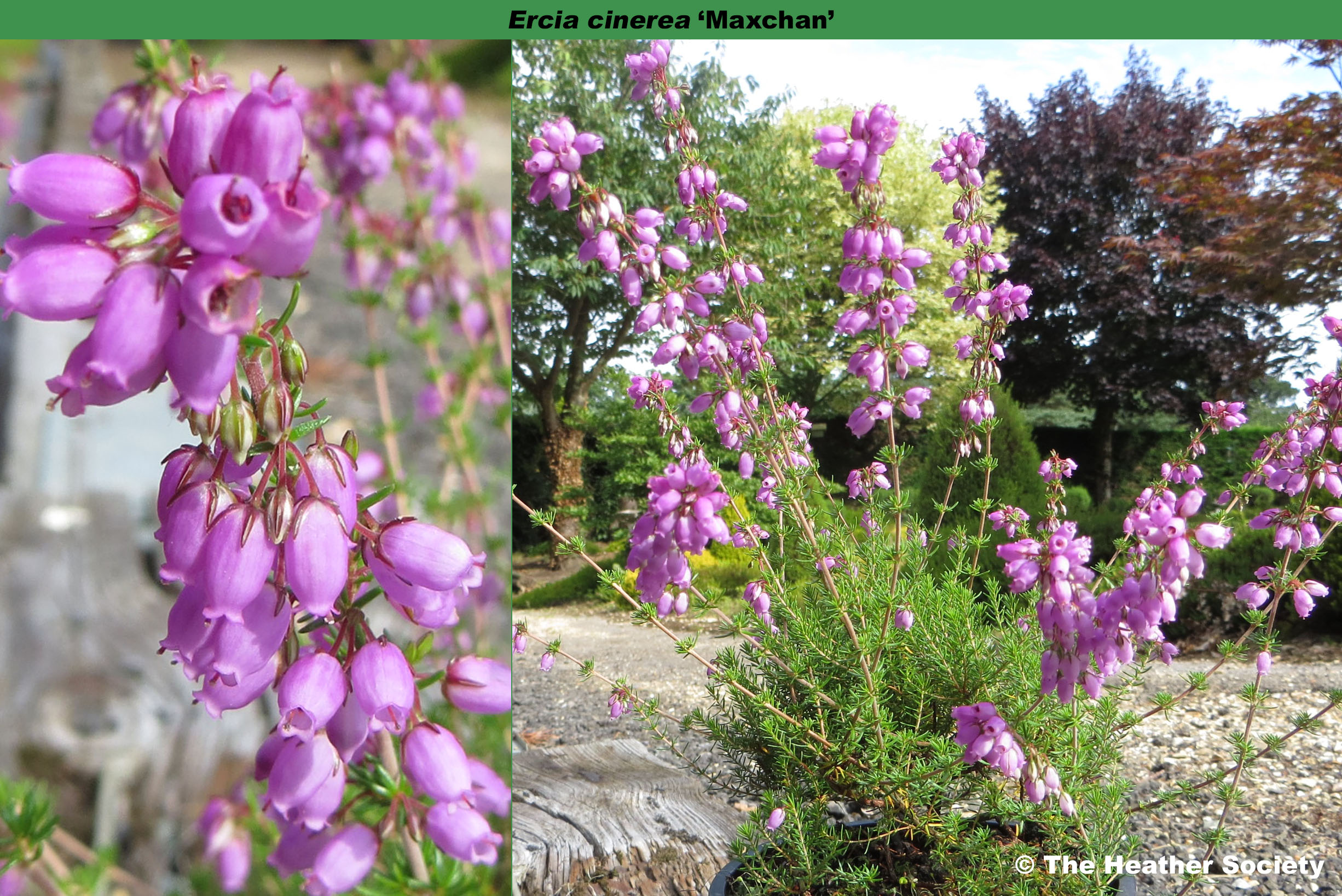
Flowers amethyst (H1); VI-IX; foliage dark green, habit erect; height 20cm; spread 40cm. French origin.
Erica terminalis
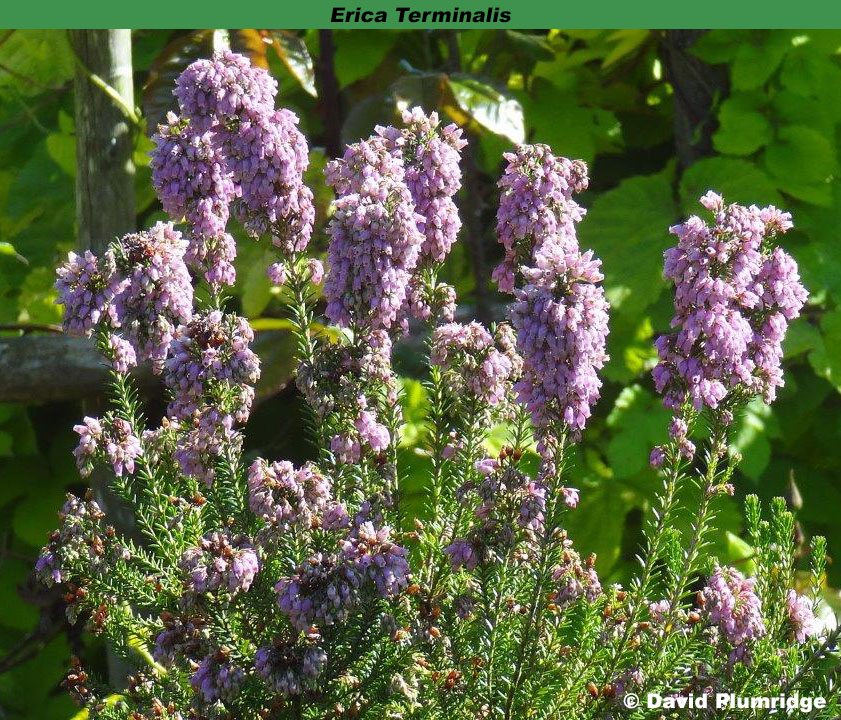
Flowers in terminal umbels; calyx with 4 free sepals; corolla 6–7mm long, urn-shaped, lilac-pink (H11); stamens 8, included; anthers with 2straight spurs; nectar produced; style-end capitate, about 4mm diameter, exserted: July – September, faded flowers russet in winter; mid-green foliage with leaves in whorls of 4, to 9mm; open habit which can be vastly improved by pruning in the early years; height to at least 1m; spread 75–100cm.
Native in south-eastern Spain, Corsica, Italy including Sardinia and Morocco, and long-naturalized in Northern Ireland. This lime-tolerant species is surprisingly hardy and is suitable for zone 5. The faded bells provide an attractive russet hue all winter.
Image courtesy of David Plumridge.