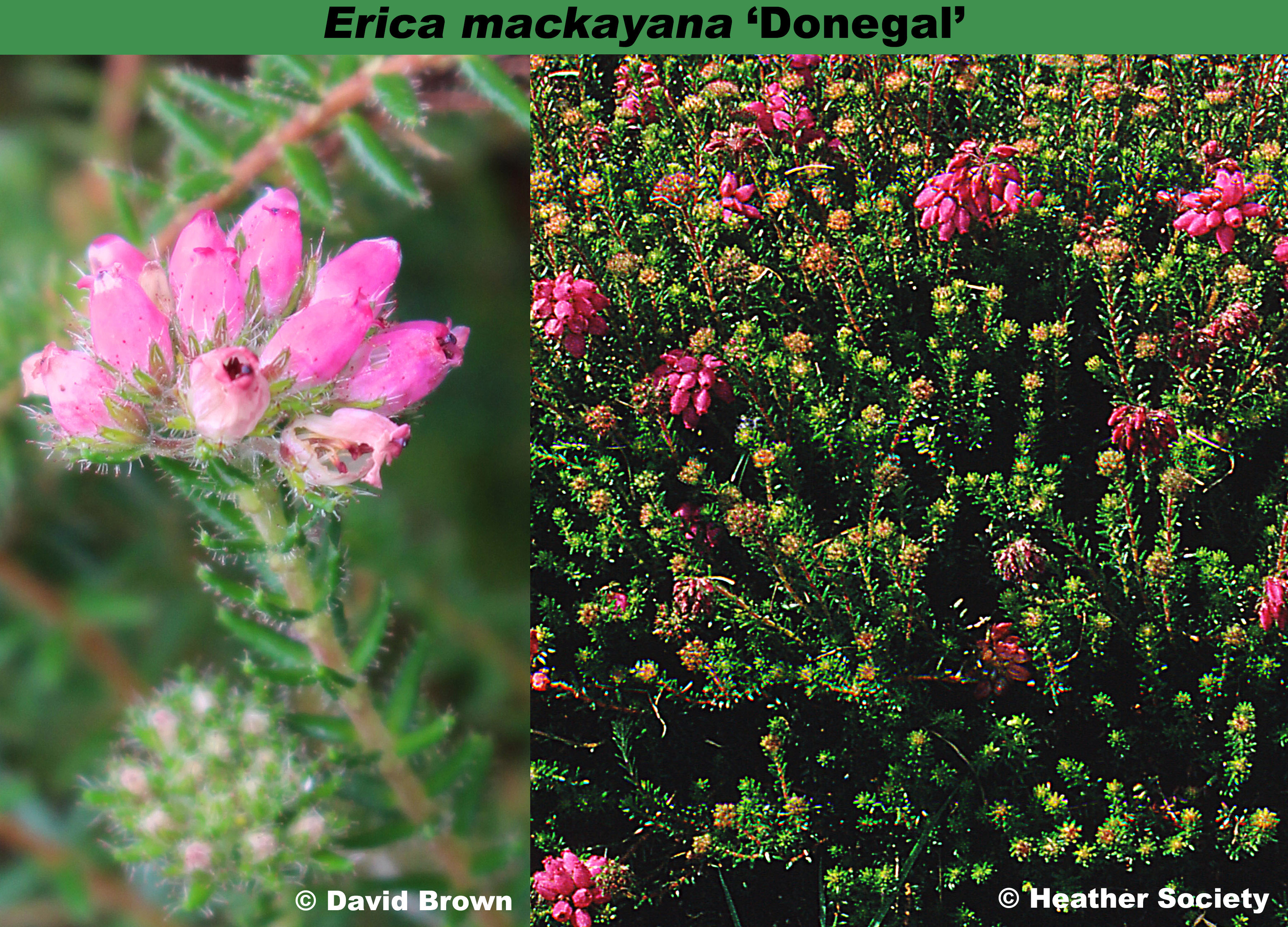
‘Donegal’

Large magenta (H14) flowers, VI–IX; mid-green foliage; spreading habit; height 26–30cm; spread 31–45cm.

Wild-collected; collected at Lough Nacung, County Donegal, Ireland, by David McClintock (Platt, Kent, England) in 1969; introduced by B. & V. Proudley (St Briavels, Gloucestershire).

Named after the county in north-western Ireland, where the clone was collected.

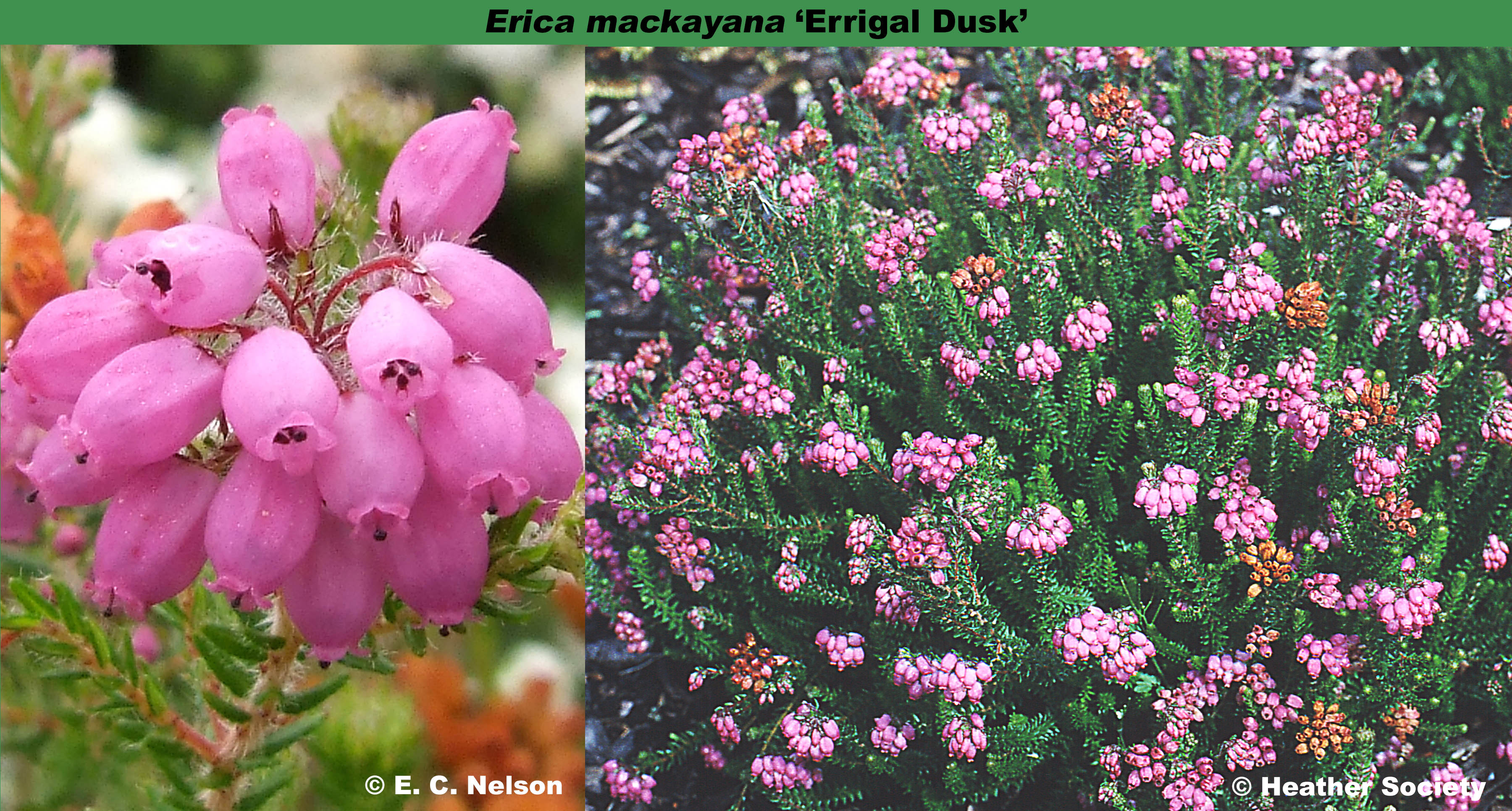
‘Errigal Dusk’

Amethyst (H1) flowers, barrel-shaped, VIII–IX; dark green foliage; strong, upright habit; height 31–45cm; spread 46–60cm.

Wild-collected; found at Lough Nacung, County Donegal, Ireland, by Dr E. C. Nelson (National Botanic Gardens, Glasnevin, Dublin, Ireland) in 1978.

Named from Errigal, the mountain at the foot of which Lough Nacung is situated; dusk was chosen because of the dusky purple colour of the corolla.

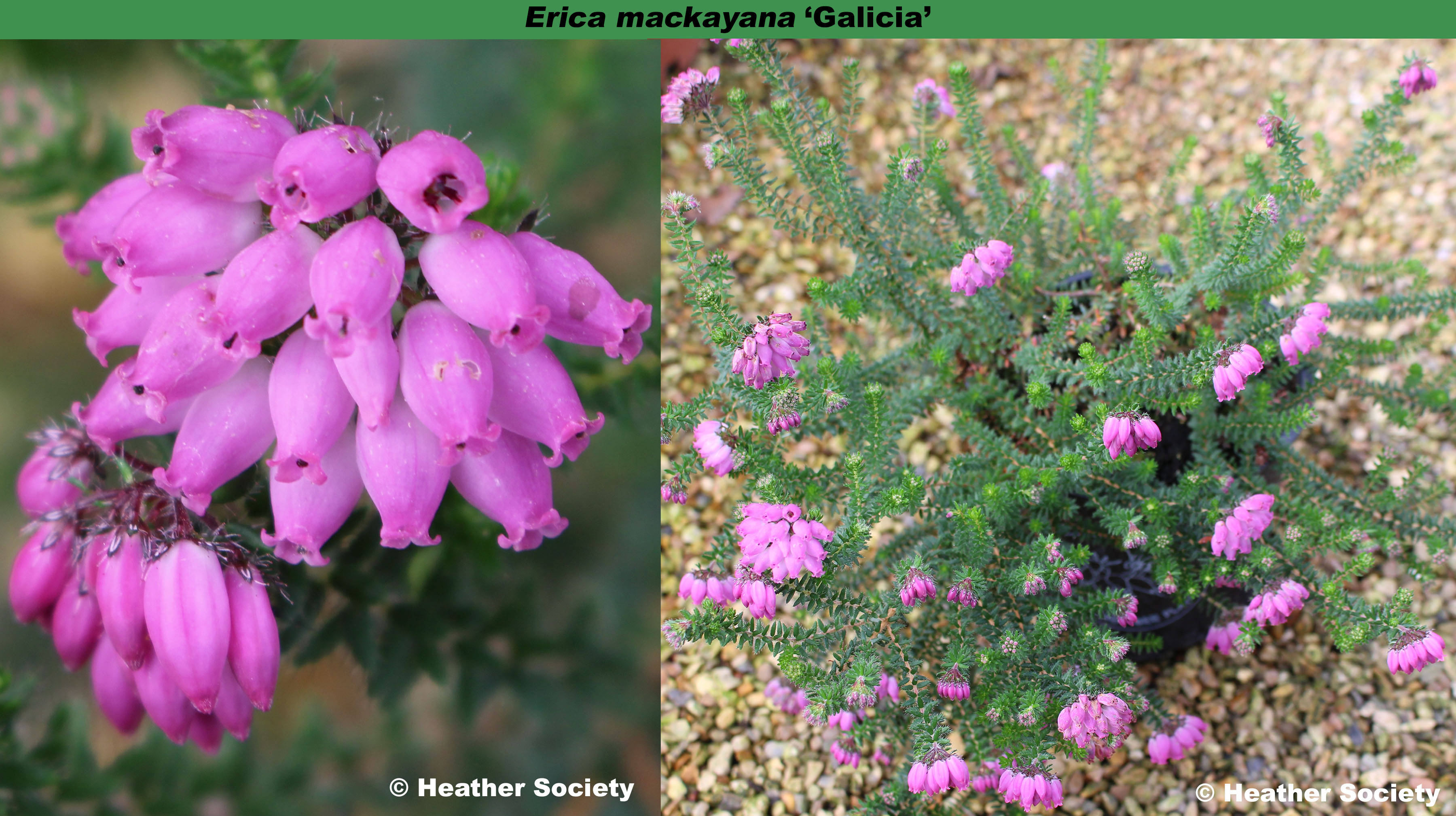
‘Galicia’

Deep magenta flowers, VII–X, free-flowering; dark green foliage; height 26–30cm; spread 46–60cm. Collected in Galicia, Spain, by David McClintock, Dr Charles Nelson and David Small in 1982.

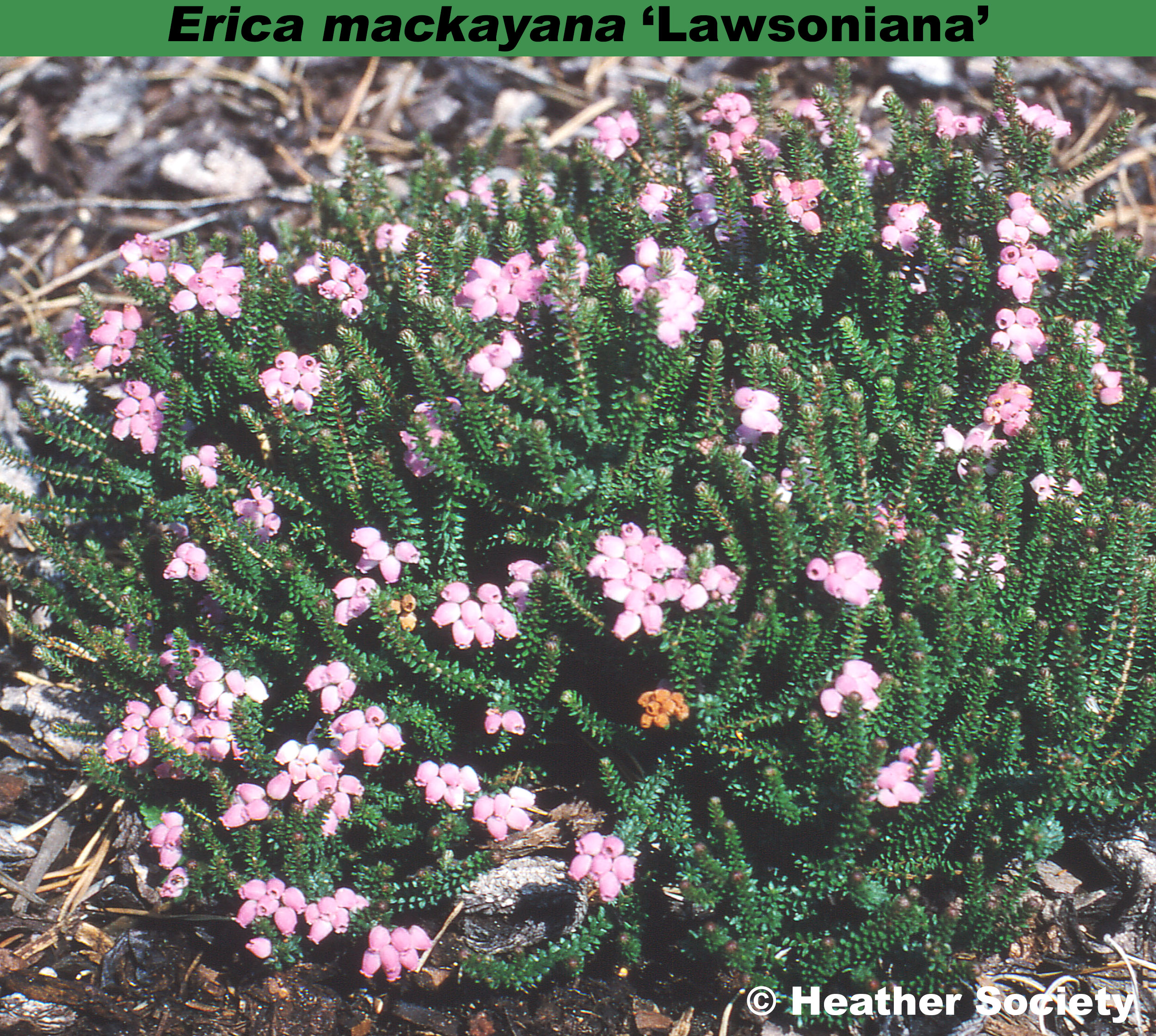
‘Lawsoniana’

Pale pink (H8) flowers, VII–IX, corolla often with more than 4 lobes, and style short and malformed; green foliage, paler than other cultivars; height 10–15cm; spread 21–25cm.

Wild-collected; found in Ireland, probably in Connemara, County Galway, but its history is not known in detail; introduced by Lawson & Sons (Edinburgh, Scotland) about 1875.

Of obscure origins and certainly not the plant which was originally given the name Erica tetralix subsp. lawsoniana (see Yearbook of The Heather Society 2000: 77–80).

Named after the nurserymen (see also Erica mackaiana ‘Lawsoniana’); at the time Charles Lawson was the owner (he is also commemorated in the Lawson cypress).

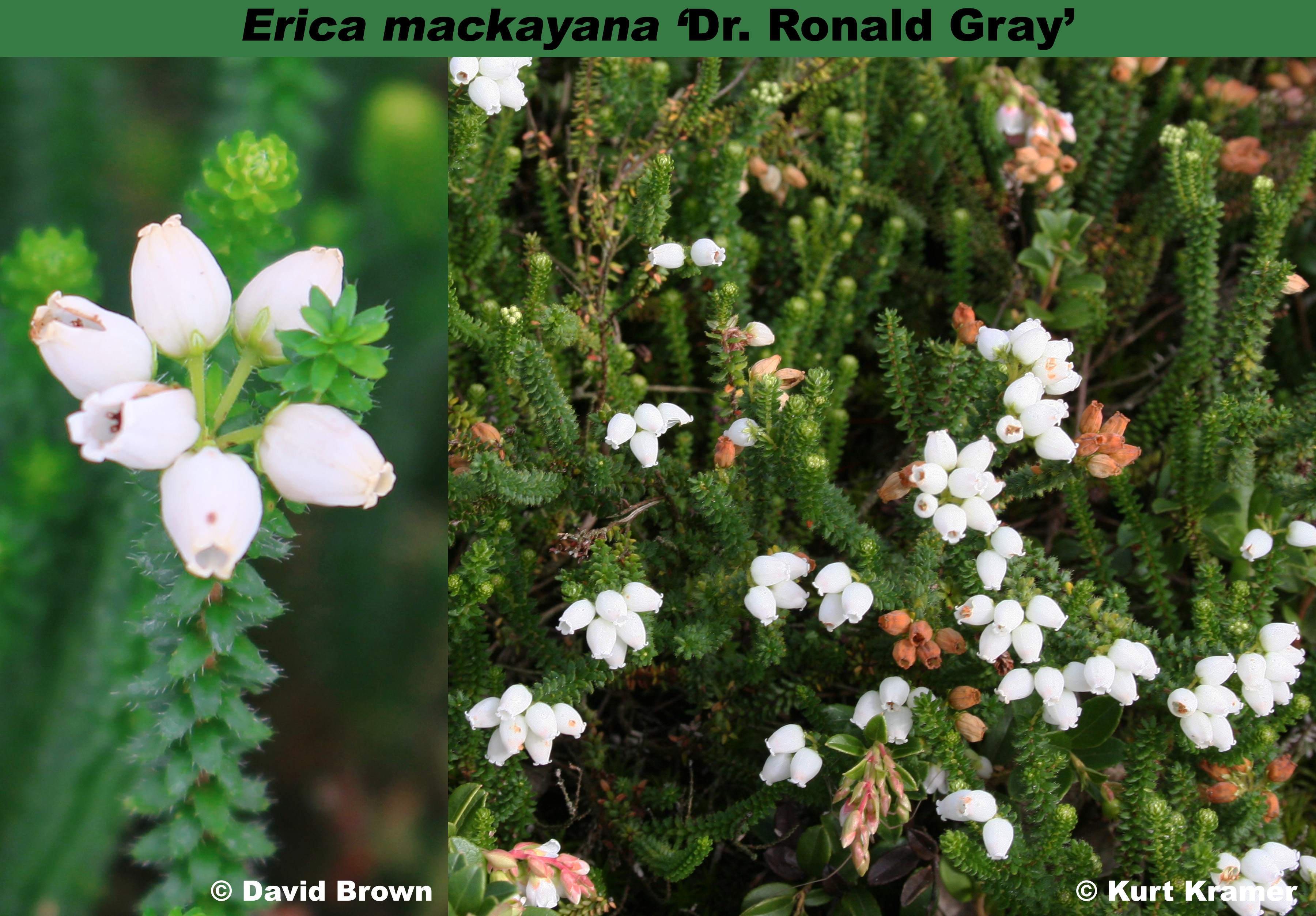
‘Dr. Ronald Gray’

White flowers, VII–X, sparse; mid-green foliage; broad spreading habit; height 10–15cm; spread 31–45cm.

A sport from ‘Lawsoniana‘ found by Dr Ronald Gray (Hindhead, Surrey) in 1964; introduced by Maxwell & Beale (Broadstone, Dorset) in 1966.

Named after the finder, Dr Ronald Gray, a general practitioner and Vice-president of The Heather Society, who died on 22 March 1966 (Yearbook of The Heather Society 1966: 2-3).

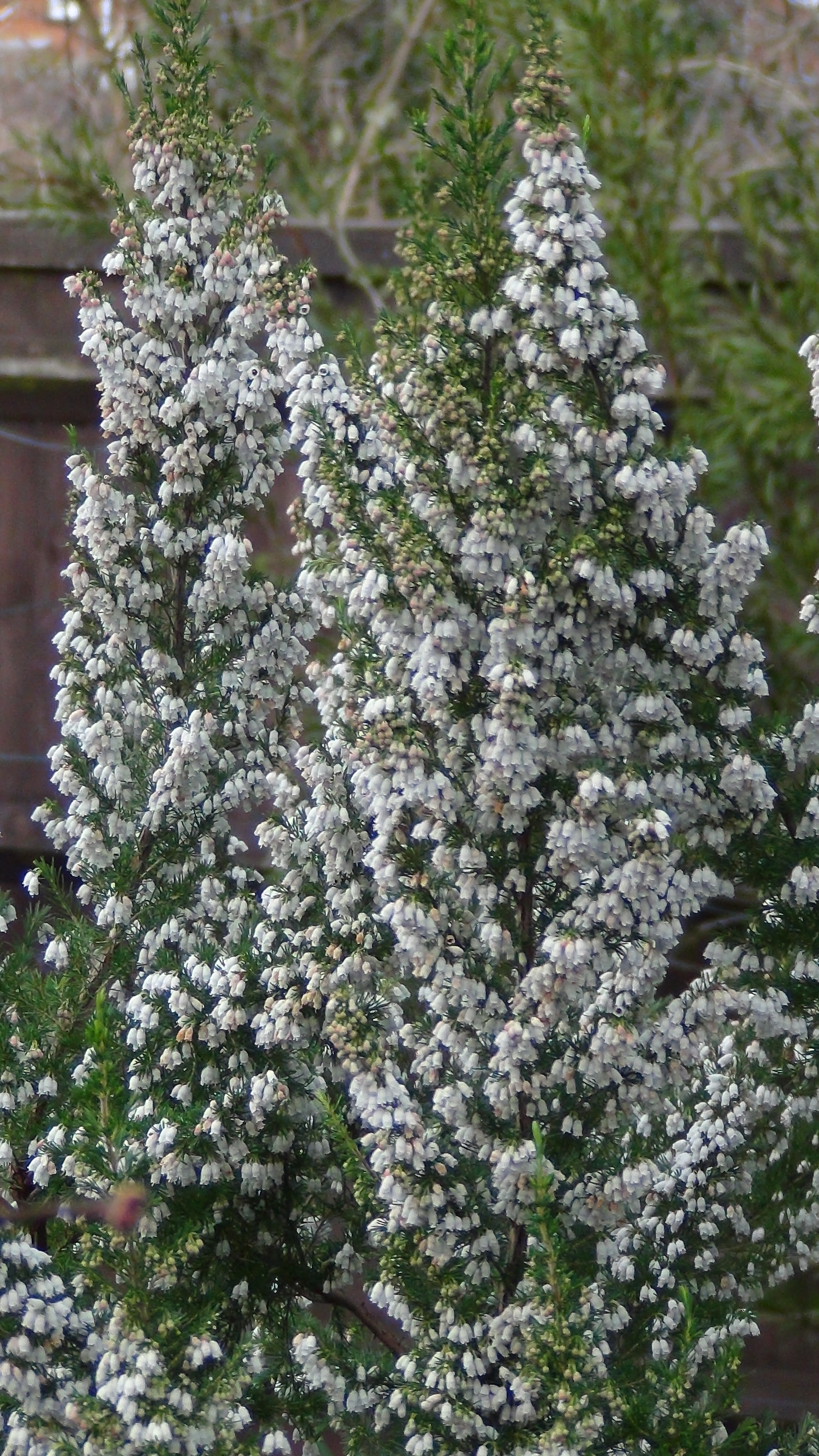
Erica lusitanica

White flowers, XII–V, buts sometimes tinged pink; mid-green foliage; open erect habit; height to 1-4.5m; spread 61–75cm. Young shoots hirsute with simple, smooth hairs. Leaves in whorls of 4 (sometimes in 3s), linear to 7-0.5mm, light to dark green. Inflorescences usually numerous and crowded towards ends of shoots, appearing to form elongated panicles: 1-4 flowers in each terminal umbel at tip of short, leafy lateral shoots. Corolla white, often tinged pink in bud, narrow-campanulate to tubular-obconical, c. 5mm long. Stamens 8; filaments white, with microscopic hairs at base extending about a third the way up on sides and surfaces. Flowering in winter and spring (sometime from late autumn).

Often confused with Erica arborea (tree heath), this species can be distinguished clearly by two characters, both easily detectable using a good hand-lens: there are no branched hairs on the stems, but there are hairs, tiny, simple ones, on the lower portions of filaments of the stamens.

Erica lusitanica is native on the Iberian Peninsula ranging into south-western France.•

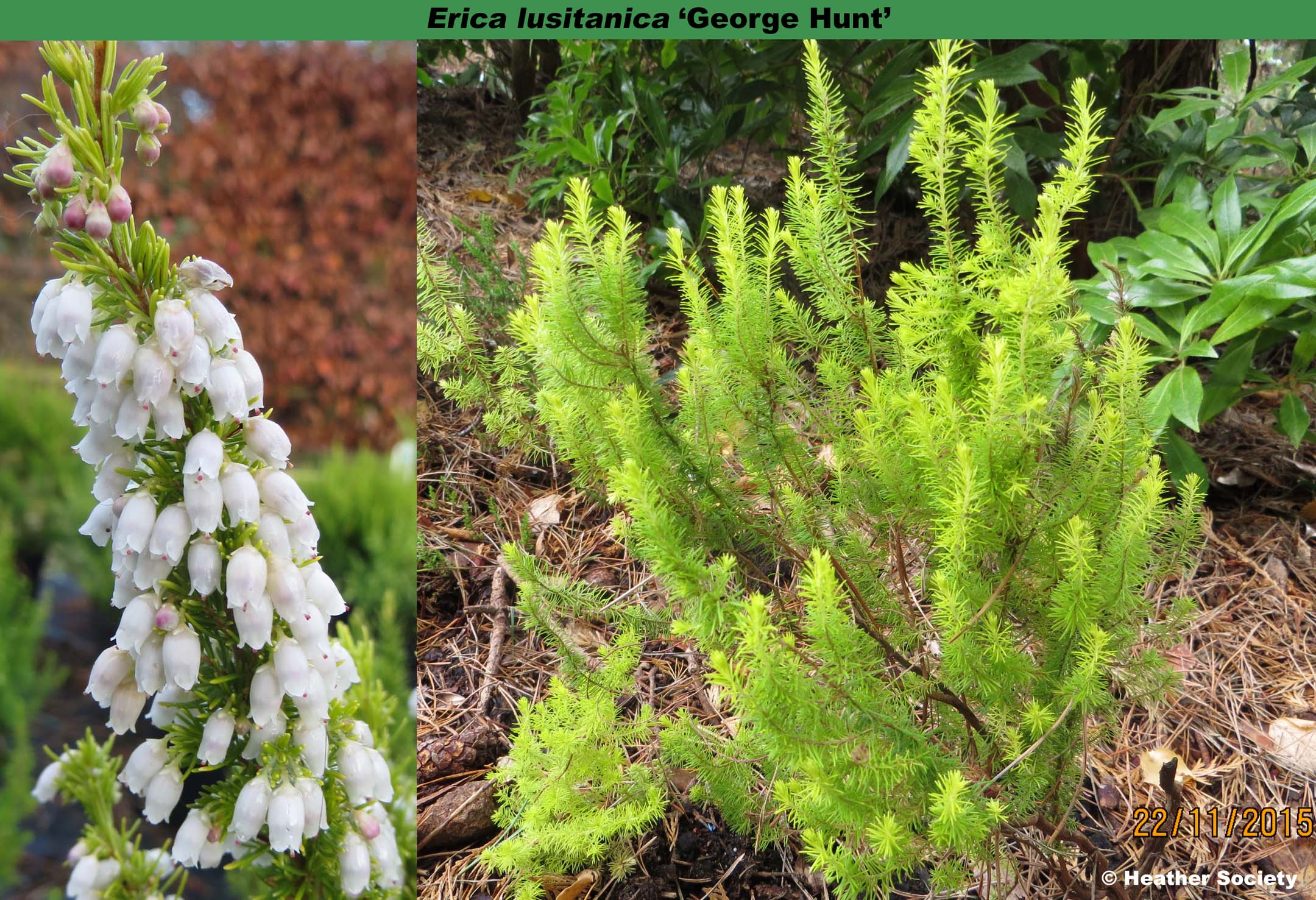
‘George Hunt’ (f. aureifolia)

White flowers, III–IV; yellow foliage throughout the year; height 61–75cm; spread 31–45cm. Outstanding plant for sheltered but open sites, but it i tender and should not be planted where temperatures can drop to –10°C. Found by George Hunt who gave all of his stock away in aid of the National Cancer Research Campaign.

‘Le Vasterival’

White flowers with pink buds, III–V, in long plumes; dark green foliage; erect. From the garden of the Princess Sturdza, called Le Vasterival (Normandy, France), introduced by Minier’s Nursery). This was wrongly identified initially as Erica x veitchii (see Heathers 7: 71. 2010), and is marketed under the trade designation GREAT STAR

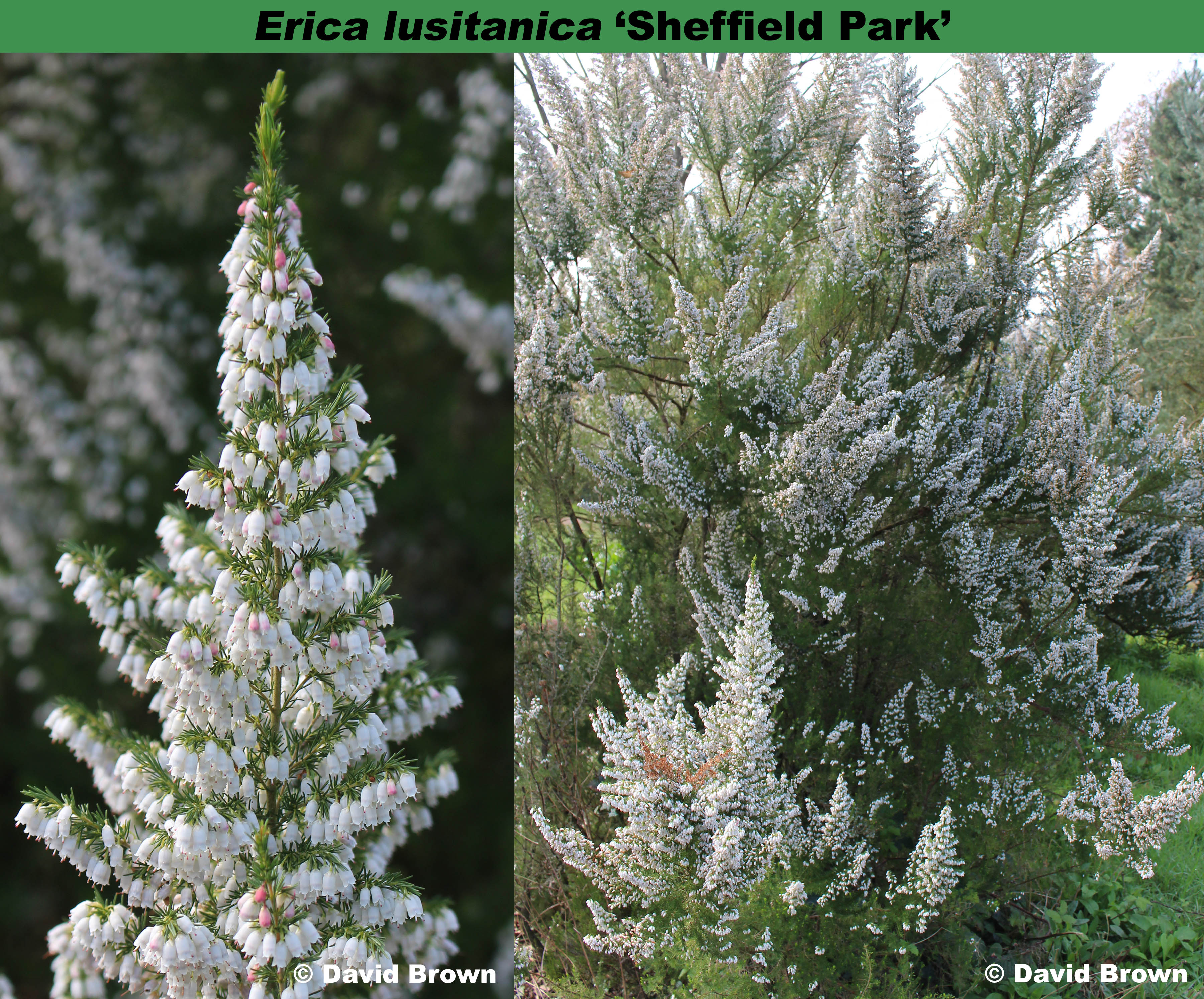
‘Sheffield Park’

White flowers, with deep pink buds; height 61–75cm; spread 31–45cm.

A seedling from Sheffield Park (Sussex) introduced by Liss Forest Nursery by June 1996.

Named after the garden where it was found.